In South Africa, communities have increasingly resorted to self-administered justice in response to pervasive crime, a phenomenon commonly referred to as mob justice or vigilantism. This practice involves groups of citizens apprehending and punishing suspected criminals without formal legal processes, often resulting in severe injuries or fatalities. Official statistics and reports highlight the scale and implications of this trend, driven by factors such as distrust in law enforcement and high levels of violent crime.
Statistical Overview of Mob Justice Incidents
South African Police Service (SAPS) data reveals a marked increase in murders linked to mob justice over recent years. In the 2017/18 financial year, 849 murders were ascribed to vigilantism and mob justice. This figure decreased slightly to 789 in 2018/19, but then rose significantly to 1,202 in 2020/21, 1,353 in 2021/22, and reached 2,124 in 2022/23. In 2022 alone, out of approximately 27,000 recorded murders nationwide, at least 1,894—or about 7%—were attributed to mob justice and vigilantism, more than double the number from five years prior. The first nine months of 2023 saw an additional 1,472 deaths related to these incidents.
More recent figures indicate the persistence of this issue. In the third quarter of the 2023/24 financial year (October to December 2023), 431 murders were linked to vigilantism and mob justice attacks, with Gauteng recording the highest at 84, followed by the Eastern Cape with 80, and KwaZulu-Natal with 78. By the end of 2024, in the nine months leading up to December, over 1,000 people were killed in mob justice incidents, with an additional 781 left severely injured. Into 2025, the trend continued, with at least 12 individuals murdered in vigilante attacks from January to early March.
For the first quarter of the 2024/25 financial year (April to June 2024), overall murders dipped slightly to 6,198, but vigilantism and mob justice remained among the top five causative factors for murders, attempted murders, and assaults causing grievous bodily harm. In Limpopo during this period, authorities noted mob justice as a continuing societal issue that undermines the rule of law. By the third quarter of 2024/25 (October to December 2024), total murders stood at 6,953, representing a 9.8% decrease from the previous year, but increases in vigilantism and mob justice were reported in provinces including the Eastern Cape, Free State, KwaZulu-Natal, Limpopo, Mpumalanga, and North West. Vigilantism contributed to 389 murders in one reported quarter in 2025.
In the first half of the 2025/26 financial year (April to September 2025), murders showed a significant decline overall, but causative factors still included vigilantism and mob justice, alongside arguments, robberies, and gang-related violence. These statistics underscore a daily average of around two deaths from mob violence as far back as 2019, with trends showing escalation in subsequent years.
Underlying Causes and Contextual Factors
The rise in mob justice is closely tied to systemic issues within South Africa’s criminal justice system. Research indicates that communities often turn to vigilantism when they perceive law enforcement as ineffective or untrustworthy, a legacy stemming from the apartheid era where institutionalized violence eroded public confidence in police. High levels of inequality, persistent crime, and interpersonal violence exacerbate this distrust. Studies show that violence does not emerge in isolation; communities typically attempt peaceful resolutions first, resorting to mob actions only after repeated failures by authorities to address grievances.
A 2024 book on the subject notes that mob justice has become more desperate and furious in recent years, influenced by events like the July 2021 unrest and operations targeting foreign nationals. Social media platforms, including X (formerly Twitter), frequently feature justifications for such actions, citing slow or failed criminal justice systems as primary reasons. Public trust in the SAPS has reached its lowest point in nearly three decades, further fueling these community responses.
Notable Incidents and Community Actions
Specific cases illustrate the severity of mob justice. In May 2021, in Zandspruit informal settlement, five young men were gruesomely murdered by community members—stripped, doused with petrol, and set alight—in a manner reminiscent of apartheid-era tactics. In February 2019, 28-year-old Thoriso Themane was dragged, assaulted, and stoned to death by a mob in Limpopo, leading to nine arrests.
More recent examples from social media highlight ongoing occurrences. In early 2026, a home invader armed with an axe was apprehended by a neighbourhood watch in Hartbeespoort, with commenters noting that in rural areas, such suspects might face lynching. In January 2026, an ATM scammer was caught and manhandled by a crowd, with observers emphasizing the risk of mob justice overtaking police intervention. Another post from January 2026 discussed a video of suspected robbers, with users advocating for mob justice as a solution to crime. A security firm in January 2026 warned of rising mob justice due to declining trust in law enforcement. In December 2023, a mob justice attack in Diepsloot resulted in five men being burnt to death, leading to five arrests. Forensic studies from earlier periods, such as one covering 2007-2017 in a single mortuary, reported an average of 35.4 mob justice fatalities per year, though national figures are higher.
Broader Implications
Mob justice accounts for a notable portion of trauma cases in medical facilities. In one study from 2012-2018 at a tertiary referral center, community assaults constituted 5% of total trauma admissions and 8% of interpersonal violence-related admissions, with 18% of blunt injuries from such assaults. Victims often sustain blunt trauma from weapons or group attacks. While communities view these actions as necessary for safety, they violate principles of the rule of law, including rights to fair trial and life.
Experts warn that this trend reflects a failed criminal justice system and calls for urgent reforms to restore public faith in official institutions.
Tragic Discovery: Body of Missing 23-Year-Old Found in Shallow Grave in Mpumalanga
Kwaggafontein, Mpumalanga – Authorities have recovered the body of a 23-year-old man who had been reported missing in Kwaggafontein, Mpumalanga, on Sunday. The discovery was made by the police’s search and rescue team, marking a somber end to the search efforts.
The body was located buried in a shallow grave behind a home in the nearby area of Vlaklaagte 2. Police officials confirmed the find, which has prompted an ongoing investigation into the circumstances surrounding the man’s death.
According to reports, the deceased was last seen in the company of a 30-year-old male individual. This person is known to the police and remains at large as authorities continue their efforts to locate him.
At this stage, the exact cause of the incident remains unclear. However, it has been reported that an argument occurred between the two men prior to the disappearance, which may provide a potential lead for investigators.
Police have not released further details about the identities of those involved or any additional evidence uncovered at the scene. The investigation is active, and authorities are urging anyone with information to come forward to assist in clarifying the events that led to this tragic outcome.
SAPS Constable Drowns During Suspect Chase in North West Province
Phokeng, North West – A young South African Police Service (SAPS) officer lost his life in the line of duty after drowning while attempting to apprehend a suspect involved in robbery and burglary offenses. The incident occurred on Wednesday, February 4, 2026, in the Phokeng policing precinct.
Constable Gift Mota, aged 25 and hailing from Ermelo in Mpumalanga province, was a member of the Visible Policing Crime Prevention Unit stationed at Phokeng. During a routine patrol, he and his fellow officers received information from a local resident regarding the location of a wanted individual suspected in multiple robbery and burglary incidents.
The pursuit led the team to a densely vegetated region adjacent to a dam, situated between the Masosobane and Raffredy areas. Upon sighting the suspect, officers initiated a foot chase. In an effort to escape capture, the suspect fled into the dam’s waters. Constable Mota followed into the water but subsequently vanished from view.
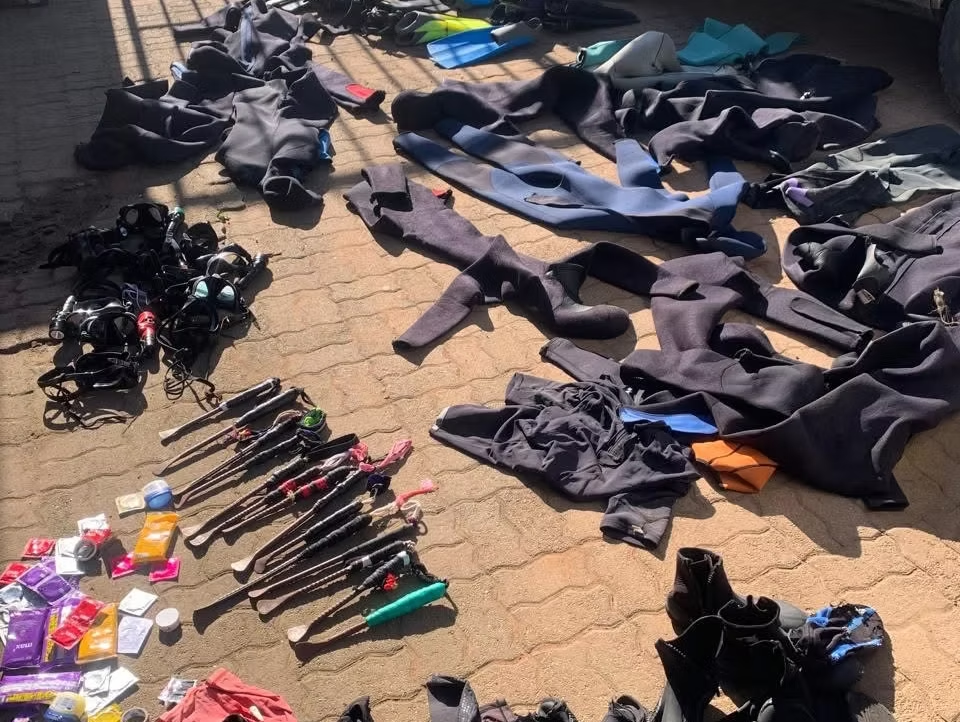
SAPS immediately mobilized its diving unit to the scene, where divers located and retrieved Constable Mota’s body from the dam. Authorities have since registered an inquest to examine the details of the event.
The South African Police Service has expressed deep sorrow over the passing of Constable Mota, highlighting it as a significant setback for both the force and the residents he protected. Officials commended his bravery, commitment, and unwavering dedication to public safety. The organization has conveyed its sympathies to his relatives, close friends, and fellow officers during this difficult period.
- Safety Alert Issued for Lebombo Border Route in Mpumalanga as Reports of Violent Crime Escalate
- Minibus Taxi Industry Remains South Africa’s Primary Mode of Public Transport Amid Persistent Competition-Related Violence
- Knowing the Rules of the Road: Why South African Pedestrians Must Prioritise Safety
- Driver Escapes Suspected Hijacking Attempt Through High-Speed Reverse Manoeuvre on South African Road
- Fatal Motorcycle Collision on R74 Manor Highway
Morbid Week in Johannesburg: Six Lives Lost to Drowning in City Waterways
JOHANNESBURG – Emergency response teams in Johannesburg have retrieved six bodies from local water bodies during a concerning three-day span, prompting urgent appeals from officials to prioritize safety measures around rivers, dams, and pools.
The recoveries, carried out by the Johannesburg Water Policing and Diving Services, occurred between February 3 and February 5 across multiple neighborhoods in the city. The sites included Norwood, Sandringham, Cosmo City, Doornkop, and Cyrildene, highlighting the widespread risks posed by urban water hazards.
Among the deceased were men and women ranging in age from 19 to 55 years old. A particularly heartbreaking case involved a seven-year-old child who drowned in an unused swimming pool in Cyrildene. In multiple instances, the bodies were discovered entangled in river currents or caught among debris, complicating the retrieval efforts. One operation demanded specialized techniques because of severe contamination in the water body, underscoring the environmental challenges faced by rescue personnel in these scenarios.
Following each recovery, the bodies were transferred to the South African Police Service for further processing. Authorities have initiated inquest dockets for all six cases to investigate the exact circumstances leading to the deaths, ensuring a thorough examination of contributing factors such as water conditions, access points, and potential preventive measures.
This cluster of incidents has intensified focus on water-related dangers in Johannesburg, where seasonal weather patterns and urban development can exacerbate hazards. Officials from the Johannesburg Water Policing and Diving Services emphasized that rivers and dams often swell with unpredictable flows, trapping individuals in submerged obstacles. Abandoned or neglected pools, like the one in Cyrildene, present silent threats, especially to young children exploring unsupervised areas.
In response, city authorities have issued clear directives to the public. Residents are advised to approach any body of water with extreme caution, avoiding entry without proper preparation. For families, the message is unequivocal: constant supervision of children near open water sources is essential to prevent tragedies. Boaters, swimmers, and anglers are recommended to don life jackets or other flotation devices as standard practice, regardless of perceived swimming proficiency or water depth.
The Johannesburg Water Policing and Diving Services, which operates around the clock to monitor and respond to such emergencies, has recorded these recoveries as part of a broader effort to map high-risk zones. Their divers, trained in both standard and hazardous extractions, navigate everything from fast-moving streams to polluted stagnant waters, often working in low visibility and under time pressure.
As inquests proceed, the police are actively seeking public input to piece together timelines and contexts for each incident. Anyone possessing details—such as sightings of individuals near the water sites prior to the recoveries or knowledge of local conditions—is encouraged to come forward. Contact can be made at the nearest police station or through the Crime Stop hotline at 08600 10111, where anonymity is protected for informants.
These events serve as a stark reminder of the invisible perils embedded in everyday landscapes. With Johannesburg’s mix of natural waterways and man-made features, maintaining vigilance remains a collective responsibility. Officials continue to monitor water levels and patrol vulnerable areas, but they stress that individual awareness is the first line of defense against such losses.
Mozambican Suspect in Kidnapping Cases Apprehended in South Africa
Centurion, South Africa – Authorities have detained a 50-year-old man from Mozambique who is sought by his home country’s government for his alleged role in multiple kidnapping incidents. The arrest took place at a high-end residential estate in Centurion, executed by the South African Police Service (SAPS).
The individual faces accusations related to kidnappings that involved demands for ransom payments. SAPS officials stated that the operation was prompted by an official arrest warrant issued by Mozambican authorities, accompanied by a formal request for extradition.
Following the apprehension, law enforcement agencies have initiated detailed investigations into the matter. The extradition proceedings are also in progress, aiming to facilitate the suspect’s transfer back to Mozambique for further legal action.
This development highlights ongoing cooperation between South African and Mozambican police forces in addressing cross-border criminal activities. The suspect’s identity has not been publicly disclosed at this stage, pending the completion of procedural requirements.
SAPS emphasized that the arrest underscores their commitment to supporting international law enforcement efforts, particularly in cases involving serious crimes like kidnapping. As the processes unfold, both nations’ authorities will continue to collaborate to ensure justice is served.