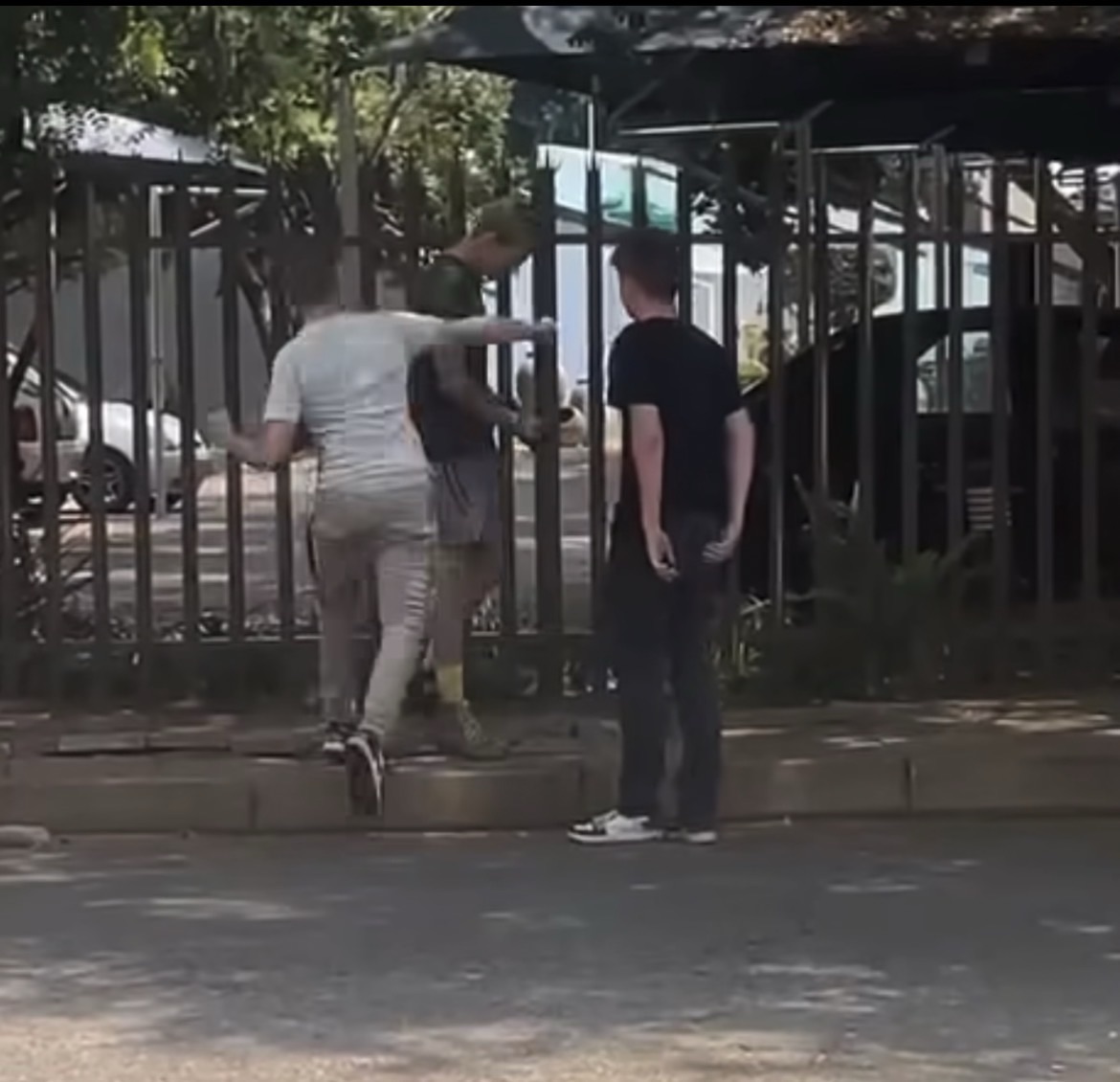
Johannesburg, South Africa – March 4, 2026 – Bullying remains a pervasive issue in South African schools, affecting millions of learners annually. According to data from the Basic Education Department and United Nations Children’s Fund in 2023, approximately 3.2 million learners experience bullying each year, roughly double the global average. A 2015 study among 12-year-old pupils in Cape Town found that 41.7% reported being hit by another student at least once, while 53.7% reported being excluded by peers on at least one occasion. The 2019 Trends in International Mathematics and Science Study indicated that 74% of Grade 5 students in South Africa were exposed to one or more forms of bullying almost monthly. Additionally, a 2013 study of 12,000 Grade 9 pupils revealed that 36% were involved in bullying as victims, perpetrators, or both, with 8% identifying as bullies, 19% as victims, and 9% as both.
Prevalence rates vary across studies and regions. In Tshwane District, a 2023 study of high school learners showed that 73.91% were involved in bullying, comprising 21.96% victims, 9.57% perpetrators, and 42.39% perpetrator-victims. Another analysis reported that bullying victimization in South Africa ranges from 16.5% to 75%, while perpetration varies from 3.9% to 8.2%. A 2007 study in Cape Town and Durban found that 36.3% of students were involved in bullying, with 8.2% as bullies, 19.3% as victims, and 8.7% as bully-victims. The 2015 Trends in International Mathematics and Science Study for Grade 9 learners reported that 64% experienced bullying on at least a monthly basis, a figure that rose slightly to 65% in 2019. An estimated 40% of school-going children experience some form of bullying, including emotional and physical abuse.
Bullying manifests in various forms, including physical, verbal, relational, and cyberbullying. Boys are more likely to encounter physical bullying such as fighting, pushing, and hitting, while girls often face relational or verbal forms like exclusion, name-calling, and rumor-spreading. Cyberbullying is particularly prevalent, with South Africa ranking fourth highest globally in a 2018 survey, where one in five teens is targeted and 84% of peers are aware of the victimization. Statistics show that 46% of teens have experienced cyberbullying, with 54% of adolescent girls reporting incidents. One in three teenagers falls victim to cyberbullying via social media platforms. Males are at higher risk of both perpetration and victimization, with younger boys more vulnerable to being targeted. Bullying often intersects with race, ethnicity, and socioeconomic status, with children from disadvantaged backgrounds more prone to experiences in diverse environments. It is strongly associated with socio-economic indicators like school quintile and regional location.
The impacts on affected children are profound and multifaceted. Bullying leads to severe psychological effects, including increased anxiety, depression, low self-esteem, thoughts of self-destruction, and behavioral conditions. It impairs emotions and cognition, resulting in trauma symptoms in 70% of victims. Bully-victims, those who are both bullied and bully others, suffer the most psychologically. Violent and anti-social behaviors are elevated among bullies, victims, and bully-victims compared to uninvolved peers. Educationally, bullying contributes to absenteeism, with 160,000 learners skipping school daily to avoid it and one in 10 high school learners doing so regularly. Poor academic performance is common, linked to factors like school quintile and regional disparities. Long-term consequences include higher risks of substance abuse, criminal convictions, and abusive relationships in adulthood for perpetrators. In the Sarah Baartman District, suicides among learners rose by 9% in 2015, with ongoing increases attributed partly to bullying.
Parents and families also bear significant burdens from bullying. Victims may exhibit psycho-social signs at home, such as increased aggression, thoughts of self-harm, feelings of helplessness, avoidance of social interaction, and sudden clinging to or avoidance of parents. Being a victim is associated with perceptions of lacking family love and care, while perpetration links to home alcohol use. Bully-victims are connected to unpeaceful home environments, lack of family support, and parental alcohol use. Many learners come from broken homes, with 60-70% in some schools affected, contributing to family distress. Parents often face emotional trauma from their children’s experiences, with risk factors including psychological elements, bullying behaviors, environmental influences, and dynamics between bully and victim. Ineffective parenting, such as authoritarian styles with punitive discipline, exacerbates issues, stemming from adverse childhood experiences that perpetuate negative patterns.
Efforts to combat bullying in South African schools involve multiple strategies at school, community, and national levels. Schools are required under the South African Schools Act 84 of 1996 to implement anti-bullying policies that ensure safe environments, including educational programs, counseling, and peer support initiatives. The National School Safety Framework, introduced in 2015, empowers schools to identify and address security threats, though its effects have been limited. Effective measures include enforcing anti-bullying laws in codes of conduct, increasing adult supervision in yards, halls, and toilets, and holding school forums devoted to the issue. Promoting a culture of respect, kindness, and inclusion through values-based education and awareness campaigns is key. Whole-school approaches emphasize restorative discipline, peer mediation, and positive reinforcement over punishment. Teacher training in trauma-informed practices and bullying recognition is essential. Support extends to victims through counseling and protection, while perpetrators receive rehabilitation via restorative justice. Reporting mechanisms must be transparent, with 67% of incidents currently unreported. Two-thirds of victims never report due to fear of ridicule or inaction.
At the parental level, programs teaching emotional regulation, communication, and non-violent discipline help disrupt violence transmission. Open communication about bullying, including cyberbullying rules, is advised. Nationally, recommendations include developing unified anti-bullying legislation across provinces and increasing investment in school-based mental health services. Ending corporal punishment in practice through campaigns and training is critical, as 8% of primary school-aged children experience violence at school, including 84% corporal punishment by teachers. Multidisciplinary teams involving nurses, psychologists, teachers, parents, and social workers are suggested to identify risks and provide empowerment skills. Higher education institutions should incorporate bullying prevention in teacher training programs.
These facts underscore the urgent need for coordinated action to address bullying’s widespread occurrence in South African youth.
Cash-in-Transit Heist Reported in Pretoria East
Pretoria, March 4, 2026 – A cash-in-transit (CIT) heist took place this morning on the Pretoria road between Solomon Mahlangu Drive and the entrance to the N4 gateway. The incident occurred near Mamelodi, on the Pretoria/Bronkhorstspruit road outside the N4 Gateway Office Park, at the corner of Solomon Mahlangu and Nellmapius.
Reports of the event began circulating shortly after 6:40 AM SAST. Witnesses described hearing gunfire at the scene during the robbery. The targeted vehicle was a money truck that was struck by the perpetrators and came to rest on its side.
One security officer was reported injured in the attack. Emergency response vehicles arrived at the location, and photographs and video footage from the scene showed a cordoned-off area with police and other services present.
A crime scene was established on the N4 gateway at R104 West after Solomon Mahlangu. Traffic authorities and public safety accounts urged motorists to avoid the N4 West beyond Solomon Mahlangu and to use alternative routes while the situation remained active.
The affected area is in Pretoria East, Gauteng Province. South African Police Service (SAPS) personnel and emergency services were on site to manage the response and secure the location.
This incident is separate from another cash-in-transit robbery reported on the same morning in Durban, where two security guards were wounded during an attack on the N2 southbound near the NPC cement factory.
As of 08:19 AM SAST, no confirmed information has been released regarding the number of suspects involved, any arrests made, the amount of cash targeted or taken, or the full extent of injuries. Updates are expected as the South African Police Service and other authorities process the scene and conduct their investigation.
The event is part of a pattern of CIT robberies that continue to affect various parts of the country, with details emerging in real time through public reports and social media. Motorists in the Pretoria East area are advised to exercise caution and monitor official traffic and safety channels for further developments.
Cash-in-Transit Robbery Leaves Two Guards Wounded on Durban’s N2 Highway
Durban, South Africa – A cash-in-transit robbery unfolded on the N2 southbound highway near the NPC Cement Factory, south of Durban, shortly after 5:30 a.m. this morning, resulting in gunfire and injuries to security personnel.
Advanced Life Support (ALS) paramedics responded to reports of multiple security officials being shot during the incident. Upon arrival, they encountered a chaotic scene where two guards had sustained multiple gunshot wounds.
One guard suffered critical injuries and required immediate advanced medical intervention. The Netcare 911 helicopter was dispatched to airlift the individual to a nearby hospital for urgent treatment.
The second guard sustained serious injuries. ALS paramedics stabilized the patient at the scene before transporting them by road to a nearby hospital for further medical care.
The N2 southbound has been closed from the M7 Edwin Swales offramp to facilitate ongoing investigations. Authorities expect the closure to last for an extended period, and motorists are urged to avoid the area entirely.
Details surrounding the events that led to the robbery remain unclear at this time. The South African Police Service (SAPS) is on site and will conduct a thorough investigation into the matter.
Driver Miraculously Survives Rollover Crash on Baden Powell Drive
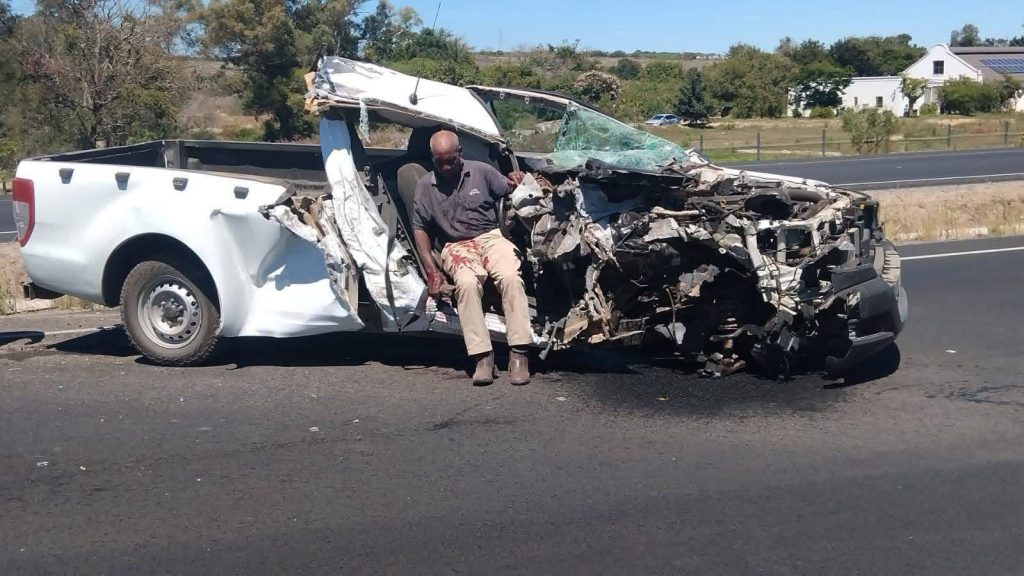
Stellenbosch, Western Cape – A driver escaped with minor injuries after a severe single-vehicle rollover accident on Baden Powell Drive (R310) near Spier Wine Farm on March 3, 2026.
The incident involved a white Ford Ranger pickup truck that sustained extensive damage, including a crushed front end, exposed engine, and deformed cab. The adult male driver was found sitting beside the wreckage, conscious and able to sit without assistance, though blood was visible on his clothing and hands.
No other casualties were reported in the crash. Emergency services and towing vehicles responded to the scene promptly.
Motorists were advised to approach the area with caution due to the accident. A separate crash on the nearby N2 inbound after Baden Powell was cleared later that day.
- Motorist Arrested in KZN for Attempted Bribery of Traffic Officers During Road Safety Operation
- Major Bust in Tsakane: 33 Foreign Nationals Detained in Crackdown on Unauthorized Mining
- Escalating Street Gang Violence in South Africa: A Persistent Threat to Public Safety
- SPAR Employee Assaulted by Colleague in Bothaville Over Breathalyzer Dispute
- Two Suspects Apprehended in Enhlanzeni District Kidnapping Incident
Fatal Collision on N2 Near Ermelo Leaves One Dead, Another Injured
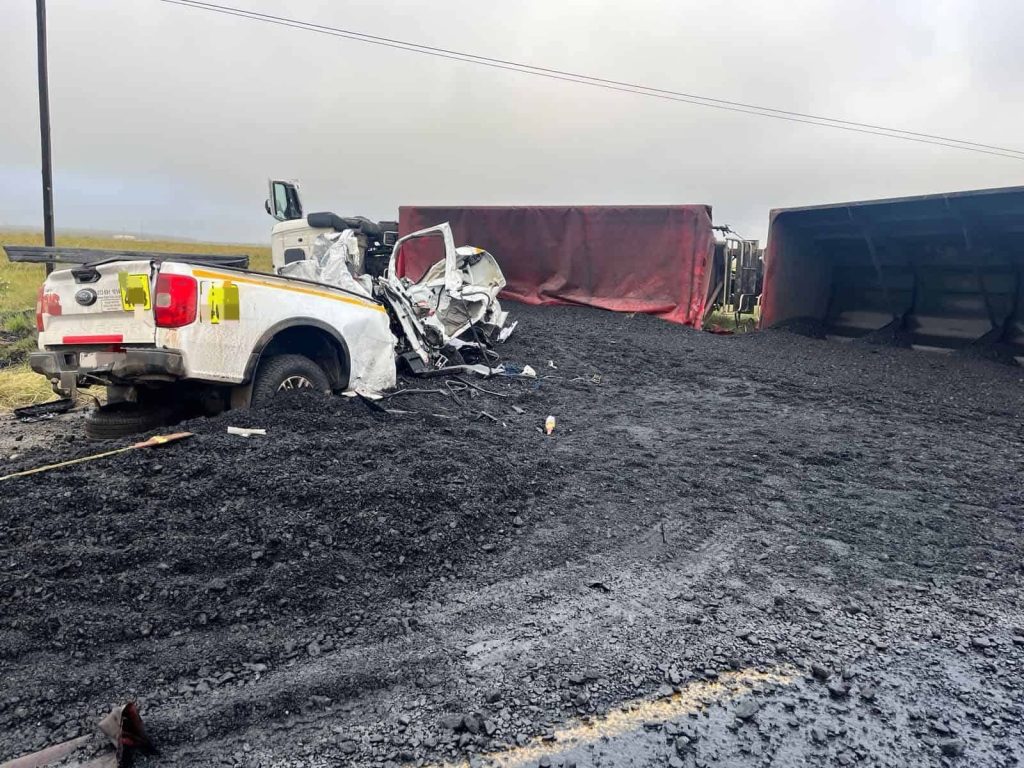
Ermelo, Mpumalanga – A serious road accident occurred on the N2 highway just outside Ermelo, before reaching Camden, earlier on March 3, 2026. The incident involved a side tipper truck and a bakkie, resulting in significant damage to both vehicles.
Emergency services responded to the scene where they discovered one occupant trapped inside the wreckage. Rescue teams employed saws and grinders to extricate the trapped individual from the twisted metal. Despite these efforts, one person was declared dead at the site of the crash. Another individual sustained serious injuries, received on-site stabilization, and was transported to a nearby hospital for further treatment.
The circumstances surrounding the collision remain under investigation by authorities. No specific causes have been identified at this time.
The N2 serves as a vital freight corridor connecting Mpumalanga to KwaZulu-Natal and other regions of South Africa. Incidents like this often lead to disruptions in traffic and logistics operations. Recovery and clean-up activities at the scene caused notable delays for motorists traveling along this route.
In a related development, another collision was reported on the N2 near the entrance to Mkhondo, though details about that event are limited and the cause has not been confirmed.
Authorities have advised drivers to exercise caution on the N2 and to provide ample space for emergency and recovery personnel working in the area.